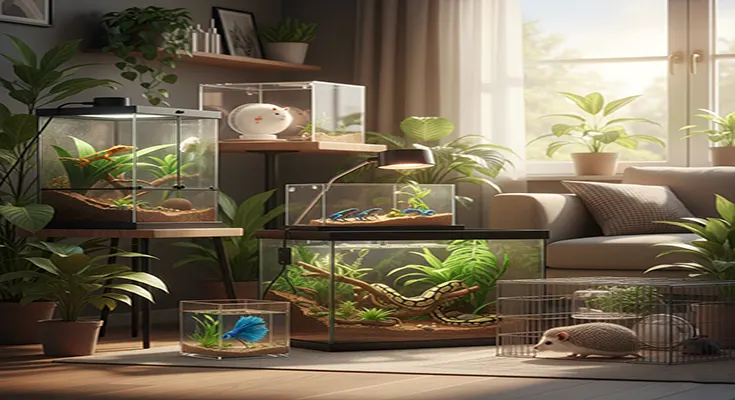
Living in an apartment shouldn’t mean you’re limited to a goldfish or a pet rock. While dogs require walks and cats need vertical space (and can sometimes be tough on a security deposit), the world of exotic pets offers a fascinating array of companions that are perfectly suited for “small footprint” living.
For the modern apartment dweller, the ideal pet is quiet, odor-free, and capable of thriving in a controlled environment. “Exotic” doesn’t have to mean “difficult.” In fact, many exotic species have lower daily maintenance requirements than traditional domesticated animals.
Here are seven low-maintenance exotic pets that bring massive personality to small spaces.
1. The Leopard Gecko (Eublepharis macularius)
Often cited as the “gateway” reptile, the Leopard Gecko is the gold standard for apartment pets. Unlike many other lizards, they don’t have sticky toe pads, meaning they won’t be climbing your walls if they escape, and they lack a functional “voice box,” making them perfectly silent neighbors.
- Why they fit: A single adult thrives in a 20-gallon long tank.
- Personality: They are incredibly docile and often become accustomed to gentle handling. They even have a “smiling” facial structure that makes them look perpetually happy to see you.
- Maintenance: They are insectivores and only need to be fed a few times a week. Since they are crepuscular (active at dawn and dusk), they don’t require expensive, high-intensity UVB lighting like many other reptiles.
2. The Crested Gecko (Correlophus ciliatus)
If you prefer a pet that utilizes vertical space rather than floor space, the Crested Gecko is your best bet. These New Caledonia natives are famous for their “eyelash” scales and their ability to jump between branches.
- Why they fit: They require a tall, vertical terrarium (roughly 18x18x24 inches), which fits easily on a bookshelf or a small end table.
- Personality: Generally calm, though a bit more jumpy than Leopard Geckos. They are visually stunning and come in hundreds of colors and patterns (morphs).
- Maintenance: This is their biggest selling point. They thrive at standard room temperatures ($21-25^{\circ}\text{C}$), meaning you likely won’t need specialized heating. Even better? They eat a powdered meal replacement mixed with water, eliminating the need to keep a box of live crickets in your kitchen.
3. The African Pygmy Hedgehog
Hedgehogs are the “introverts” of the pet world. They are quiet, solitary, and possess a unique look that is guaranteed to be a conversation starter.
- Why they fit: They live in a large cage or a modified plastic tub. While they need a wheel for exercise, they are strictly nocturnal, so they’ll be active while you’re out or asleep.
- Personality: They can be “huffy” at first, but with regular handling, they uncurl and reveal curious, snuffling personalities.
- Maintenance: Their diet consists of high-quality cat food supplemented with insects. The primary requirement is keeping their environment warm ($22-27^{\circ}\text{C}$), which can be achieved with a simple ceramic heat emitter.
4. The Pacman Frog (Ceratophrys)
Named for their round bodies and massive mouths, Pacman Frogs are the ultimate “low-energy” pet. These are sit-and-wait predators; they find a comfortable spot in the moss, bury themselves halfway, and wait for food to come to them.
- Why they fit: They require very little space because they simply don’t move much. A 10-gallon tank is plenty for an adult.
- Personality: While not a “handling” pet (their skin is sensitive), they are fascinating to watch during feeding time. They are essentially living Pokémon.
- Maintenance: They need high humidity and a damp substrate. As long as you keep their enclosure clean and misted, they are incredibly hardy.
5. Blue-Tongued Skink (Tiliqua)
If you want a reptile that feels more like a “dog” in terms of intelligence and personality, look no further than the Blue-Tongued Skink. These “sausages with legs” are known for their bright blue tongues and inquisitive nature.
- Why they fit: While they need a slightly larger enclosure (about 4 feet long), they are ground-dwellers, so they don’t need a massive, towering setup.
- Personality: They are remarkably smart. They can learn to recognize their owners and are often happy to sit on a lap while you watch TV.
- Maintenance: They are omnivores. Unlike many reptiles that need live bugs, skinks can eat a mix of greens, squash, and high-quality grain-free dog food.
6. Mexican Red Knee Tarantula (Brachypelma hamorii)
For the truly space-starved or the lover of the misunderstood, the tarantula is the ultimate apartment pet. The Mexican Red Knee is the “tarantula for people who are afraid of tarantulas.”
- Why they fit: A 5-to-10-gallon enclosure is their entire world. They are the definition of a “desk pet.”
- Personality: They are slow-moving, colorful, and surprisingly beautiful. They are essentially “pet rocks that eat bugs.”
- Maintenance: Virtually zero. They need to be fed once a week (or even less frequently for adults) and require a small water dish. They don’t need special lighting and are perfectly happy in a quiet corner.
7. Rosy Boa (Lichanura trivirgata)
Many snakes grow too large for apartment living, but the Rosy Boa is a delightful exception. These docile, slow-moving snakes stay small (usually under 3 feet) and are native to the American Southwest.
- Why they fit: They are thick-bodied but short, fitting comfortably in a 20-gallon enclosure.
- Personality: Rosy Boas are famously calm and almost never bite. They move with a slow, deliberate grace that is very relaxing to watch.
- Maintenance: Because they are desert animals, they don’t have complex humidity requirements. They eat once a week and are very clean animals.
The Three Golden Rules of Apartment Exotics
Before you bring home your new roommate, keep these three factors in mind to ensure a smooth transition:
- Temperature Control: Apartments can get drafty or overheat. Invest in a digital thermostat to control your pet’s heat source automatically. This prevents “cooking” your pet in the summer or letting them freeze in the winter.
- Bioactive Enclosures: To minimize odors and cleaning time, consider a bioactive setup. This involves using live plants and a “cleanup crew” of tiny insects (isopods and springtails) that eat waste and mold, creating a self-sustaining ecosystem in your living room.
- Check Your Lease: Most leases that ban “pets” are referring to dogs and cats. However, it’s always wise to check if there are specific clauses against reptiles or “caged animals.” Usually, if it doesn’t bark and can’t ruin the carpet, landlords are much more lenient.
You don’t need a backyard to experience the joy of animal companionship. Whether it’s the quiet smile of a Leopard Gecko or the slow, meditative movements of a Rosy Boa, exotic pets offer a bridge to the natural world that fits perfectly on a studio apartment shelf.
By choosing a species that matches your space and your schedule, you can enjoy a unique, low-maintenance friend that brings big personality to your small home.