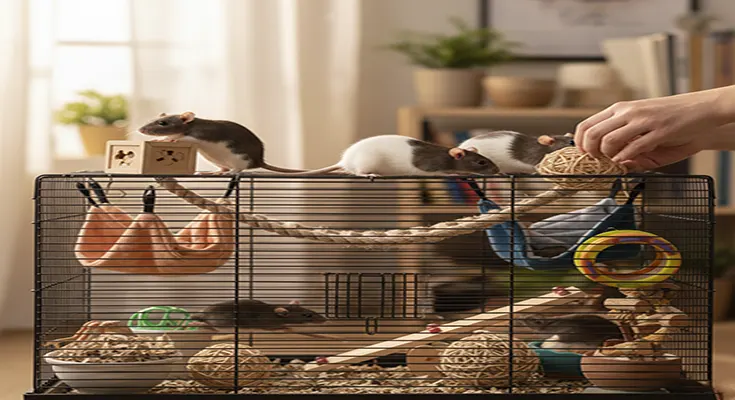
For the uninitiated, the fancy rat (Rattus norvegicus domestica) is often misunderstood. But to those who share their homes with these “pocket dogs,” the truth is clear: rats are among the most intelligent, social, and emotionally complex creatures in the animal kingdom. Studies have shown that rats possess metacognition (the ability to think about their own thinking), can dream about their daily activities, and even exhibit empathy toward their cage mates.
However, this high level of intelligence comes with a significant responsibility for the owner. A bored rat is a stressed rat. Without mental stimulation, rats can develop “stereotypies” (repetitive, purposeless behaviors), become lethargic, or even grow aggressive. To keep a rat truly happy, you must engage their “Genius” brain.
Enrichment isn’t just about a wheel; it’s about forage, puzzles, and problem-solving. Here are 10 enrichment toys and strategies designed to keep your tiny companions entertained for hours.
1. The “Dig Box” (Natural Instincts)
In the wild, rats are fossorial, meaning they love to dig. A dig box provides a safe outlet for this instinctive behavior and offers a sensory experience they can’t get from fleece liners.
- The Setup: Use a large plastic bin filled with shredded paper, coco-fiber, or sterile potting soil.
- The Enrichment: Hide high-value treats like pumpkin seeds or mealworms deep inside. Your rats will spend hours tunneling and “foraging” for their prize.
- Pro Tip: If using soil, you can plant “cat grass” or wheatgrass directly in the bin. The rats will enjoy both the digging and the fresh greens.
2. The Foraging Wheel and Spin-and-Eat Puzzles
Rats are natural scavengers. In a cage, food is usually presented in a ceramic bowl, requiring zero effort. Foraging toys change the dynamic by making them “work” for their calories.
- The Toy: Many bird foraging toys work perfectly for rats. These include clear wheels where the rat must spin the device to align a hole with a treat compartment.
- Why it works: It builds dexterity and rewards persistence. It mimics the natural search for food, which is a major part of a wild rat’s daily cognitive load.
3. The “Pea Fishing” Pond
Rats are surprisingly adept at handling water, and “pea fishing” is the ultimate summer enrichment activity.
- The Setup: Fill a shallow, heavy ceramic dish with an inch or two of water. Drop in a handful of frozen peas or corn.
- The Action: The peas sink and bob, and the rats must use their hands and mouths to “fish” them out.
- The Benefit: This provides tactile stimulation and a cooling activity for warmer days. Some rats will dive right in, while others will delicately “bob” from the edge.
4. Interactive Treat Piñatas
You don’t need to spend a fortune at the pet store for high-level enrichment. The most effective rat toys are often DIY.
- The Build: Take an empty toilet paper roll, stuff it with tissue paper and treats (like plain popcorn or a piece of walnut), and fold the ends shut.
- The Challenge: Hang it from the top of the cage using hemp string. The rats must figure out how to steady the swinging roll and chew through the cardboard to reach the reward.
5. The “Rat-Sized” Agility Course
Because rats are highly food-motivated and bond closely with humans, they can be trained to navigate complex obstaclelegged courses just like agility dogs.
- The Components: Use small cardboard boxes for tunnels, popsicle sticks for “weave poles,” and low platforms for jumps.
- Training: Use a “lure” (like a lick of baby food on a spoon) to guide them through the course.
- The Result: This strengthens the bond between you and your pet while providing intense mental and physical exercise.
6. Destructible “Nesting” Bundles
Rats have a biological need to nest and a dental need to chew. Destructible toys satisfy both.
- The Toy: Take a handful of safe nesting materials—fleece scraps, paper streamers, and untreated raffia. Tie them tightly together with a piece of sisal rope.
- The Goal: The rats will spend hours untying, shredding, and carrying the pieces back to their sleeping quarters to “renovate” their house.
7. Logical “Slide and Hide” Boards
Dog and cat “brain games” (like those by Nina Ottosson) are becoming popular for small pets.
- The Toy: A board with various sliding compartments and lifting lids.
- How it Works: You hide a treat in one of the slots. The rat must learn that they have to slide a lever to the left before they can lift the lid. This “multi-step” logic is a perfect workout for their prefrontal cortex.
8. Liquid Treat Lick-Mats
Rats are incredibly fast eaters. A lick-mat (or a textured silicone pad) slows them down and provides a calming, repetitive activity.
- The Setup: Smear a thin layer of sugar-free yogurt, unsweetened applesauce, or malt paste onto a textured mat.
- The Enrichment: The rat has to use its tongue to get into the crevices of the mat. This “licking” action is self-soothing and can keep a rat occupied for 20 minutes straight.
9. The “Box City” Maze
Rats love enclosed spaces and verticality. A “Box City” during free-roam time is the gold standard for environmental enrichment.
- The Setup: Save your delivery boxes. Cut holes in them and tape them together to create a multi-level labyrinth.
- Variable Design: Change the layout every week. A new configuration forces the rat to “re-map” their environment, which stimulates spatial memory.
10. Scent Trails and “The Great Hunt”
A rat’s world is defined by their nose. Scent-based games are often overlooked but deeply rewarding.
- The Game: Take a piece of high-smelling food (like a tiny bit of boiled chicken) and drag it along the cage bars or across a play area to create a “scent trail.” Hide the food at the end of the trail.
- Why it’s genius: It engages their most powerful sense and provides a “jackpot” reward that reinforces their tracking skills.
Enrichment Summary Table
| Toy Type | Primary Skill | Effort Level (Owner) |
| Dig Box | Natural Instinct / Foraging | Medium |
| Pea Fishing | Tactile / Dexterity | Low |
| Agility Course | Problem Solving / Bonding | High |
| Lick Mats | Relaxation / Slow Feeding | Low |
| Scent Trails | Olfactory Processing | Medium |
The Importance of Variety: The “Rotation” Rule
Rats are so intelligent that they can habituate to a toy quickly. If a puzzle remains in the cage for a month, it becomes “furniture” rather than a “toy.”
The Golden Rule: Rotate your enrichment toys every 3 to 4 days. Keep a “toy bin” and swap items out during cage cleanings. This ensures that every time your rats wake up, there is something “new” in their world to investigate.
Your rats aren’t just “living” in their cage; they are experiencing their world through the environment you provide. By integrating these 10 enrichment strategies, you are doing more than just preventing boredom—you are honoring the incredible cognitive potential of these tiny geniuses. A busy rat is a tired, happy, and long-lived rat.