

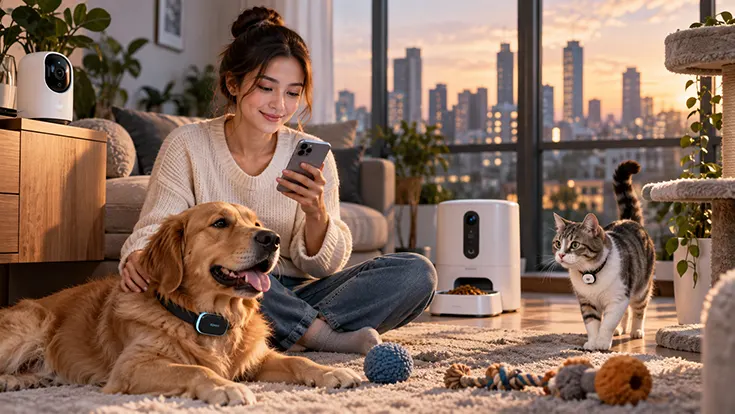
Modern pet ownership can be challenging, especially for people living in busy cities and managing demanding work schedules. Between long commutes, meetings, errands, and social commitments, pet parents may worry about whether their dogs or cats are safe, fed, active, and healthy while they are away from home.
Fortunately, advances in pet technology are making it easier to stay connected with companion animals throughout the day. From GPS tracking collars to automated feeders, interactive cameras, and smart health-monitoring wearables, today’s high-tech pet products provide convenience while helping owners maintain greater awareness of their pets’ daily routines.
For tech-savvy pet parents, these devices can become an important part of a modern pet-care routine.
GPS Tracking Collars for Greater Peace of Mind
One of the biggest concerns for pet owners is the possibility of a dog or cat wandering away. Urban environments can present additional risks because of traffic, unfamiliar neighborhoods, crowded streets, and numerous potential escape routes.
GPS tracking collars provide a practical solution by allowing owners to monitor their pet’s location using a connected smartphone or web application. Depending on the device, owners may be able to view their pet’s current position, review location history, or establish virtual boundaries.
Geofencing is particularly useful for busy pet owners. An owner can create a designated safe area around their home or another familiar location. If the pet leaves that area, the system can send an alert to the owner’s phone.
Modern GPS collars may also include additional features such as activity tracking, location history, waterproof construction, and long-lasting batteries. When selecting a GPS collar, owners should consider cellular coverage, subscription requirements, battery life, device size, and compatibility with their pet.
For urban pet owners, GPS technology offers an extra layer of visibility when a pet is outside the home.
Automated Feeders Make Mealtimes More Consistent
Busy schedules can make maintaining consistent feeding times difficult. An automated pet feeder can help solve this problem by dispensing predetermined portions according to a schedule.
Instead of relying entirely on the owner’s availability, a smart feeder can provide meals at programmed times throughout the day. Many connected models can be controlled through smartphone applications, allowing owners to adjust schedules remotely.
Some automated feeders also support portion control. This can be useful for pets whose food intake needs to be managed carefully. Owners can establish specific serving sizes rather than leaving a large quantity of food available throughout the day.
Advanced models may offer notifications when food has been dispensed, when the food container is running low, or when the device requires attention.
For pet parents who regularly work late or spend long periods away from home, automated feeding technology can make daily routines more predictable.
However, smart feeders should complement—not completely replace—responsible pet care. Owners should still check the device regularly, keep food supplies fresh, and have a backup plan in case of power or connectivity problems.
Interactive Camera Systems Keep Owners Connected
Pet cameras have evolved far beyond simple home security cameras. Interactive camera systems are designed specifically to help owners stay connected with their pets while they are away.
A modern pet camera may provide high-definition video, two-way audio, motion detection, night vision, and smartphone notifications. Some models can also dispense treats or provide interactive features that encourage pets to respond to their owners.
Two-way communication can be particularly useful. A pet parent working in an office, for example, may be able to check on a dog during a lunch break and communicate through the camera.
Interactive cameras can also help owners understand what their pets do during the day. Video footage may reveal behaviors that would otherwise go unnoticed, such as excessive barking, destructive activity, unusual sleeping patterns, or anxiety when the owner leaves.
For households with multiple pets, strategically positioned cameras can provide visibility into different areas of the home.
Privacy should also be considered. Owners should choose reputable devices, use strong passwords, enable available security features, and regularly update the camera’s firmware.
Smart Health-Monitoring Wearables
Technology is also changing the way pet parents track health and wellness. Smart health-monitoring wearables can collect information about a pet’s daily activity and behavior.
Depending on the product, a wearable device may track movement, sleep patterns, exercise levels, rest periods, or other behavioral indicators. Some systems can help owners establish a baseline for their pet’s normal activity and identify changes over time.
For example, if a normally active dog suddenly becomes significantly less active, the owner may notice the change through the device’s activity data. This does not necessarily indicate a medical problem, but it can provide useful information to discuss with a veterinarian.
Wearables can be especially valuable for owners who want to take a more data-driven approach to pet care. Instead of relying exclusively on occasional observations, they can use long-term activity information to understand their pet’s lifestyle.
It is important to remember that consumer wearables are not necessarily medical diagnostic devices. Unusual readings or behavioral changes should be evaluated in context, and concerning symptoms should be discussed with a qualified veterinarian.
Integrating Multiple Smart Pet Devices
The greatest advantage of modern pet technology can come from combining several devices into a coordinated system.
For example, a busy dog owner might use a GPS collar for outdoor location tracking, an automated feeder for scheduled meals, an interactive camera for remote check-ins, and a wearable for activity monitoring.
Together, these technologies provide information across several aspects of daily pet care:
- Location: Where is the pet?
- Nutrition: When and how much did the pet eat?
- Activity: How active has the pet been?
- Behavior: What is the pet doing while alone?
- Communication: Can the owner interact with the pet remotely?
Some products can also connect with smartphone applications, creating a centralized experience for monitoring different aspects of pet ownership.
However, technology should be viewed as a support system rather than a substitute for human interaction. Pets still require exercise, companionship, affection, grooming, environmental enrichment, and appropriate veterinary care.
Choosing the Right Technology for Your Pet
Not every pet needs every smart device. The best approach is to identify the problems technology can realistically solve.
For an escape-prone dog, a GPS tracker may be the most valuable investment. For an owner who frequently works long hours, an automated feeder and interactive camera may provide greater convenience. For a pet parent interested in monitoring daily wellness trends, a smart wearable could be more appropriate.
Cost is another consideration. Some devices have monthly subscriptions for cellular connectivity or cloud services. Owners should calculate the total cost of ownership rather than considering only the initial purchase price.
Battery life, reliability, ease of setup, data security, device durability, and customer support are also important factors.
The Future of Smart Pet Care
As connected technology continues to advance, smart pet care is likely to become increasingly sophisticated. Artificial intelligence, improved sensors, cloud-based analytics, and more integrated applications could give owners better insight into their pets’ behavior and routines.
Future systems may increasingly connect feeding, activity, location, environmental monitoring, and communication into unified platforms. The goal is not simply to add more gadgets but to make pet care more convenient, responsive, and informed.
For urban and busy pet owners, high-tech solutions already provide meaningful benefits. GPS tracking collars can improve location awareness, automated feeders can simplify mealtimes, interactive cameras can maintain a sense of connection, and health-monitoring wearables can provide useful wellness data.
The result is a more connected approach to modern pet ownership—one that gives technology-savvy pet parents greater convenience while providing additional peace of mind when they cannot be physically beside their companions.